
A Teardrop Banner is a portable fabric display shaped like a falling water drop. It combines a printed sleeve, a flexible pole, and a weighted base. Together, these parts create a curved surface that stays readable in changing outdoor conditions. The pole forms the banner’s spine. The fabric stretches around it. Tension keeps the graphic smooth, while the base prevents unwanted movement.
The appeal is practical. A teardrop banner can stand beside an entrance, registration desk, roadside promotion, or sports field. Its tall profile helps logos and short messages remain visible above crowded displays. The Outdoor Advertising Association of America reported more than $9 billion in U.S. out-of-home advertising revenue in 2023, showing continued demand for visible, location-based marketing. Grand View Research also identifies outdoor advertising as a growing global market, supported by brands seeking physical attention beyond digital screens. These figures do not measure Teardrop Banners directly. They show the larger environment in which portable displays compete.
Performance still depends on details. Fabric tension, print contrast, base weight, wind exposure, and viewing distance all matter. A banner may look impressive indoors but behave differently on wet grass or uneven pavement. That is easy to overlook. Good setup requires testing. The message should remain brief, with strong contrast and generous spacing. A crowded design loses impact quickly. Teardrop Banners are not automatic attention machines. They are simple tools, and their results depend on thoughtful placement, reliable materials, and realistic expectations.
What Is a Teardrop Banner?
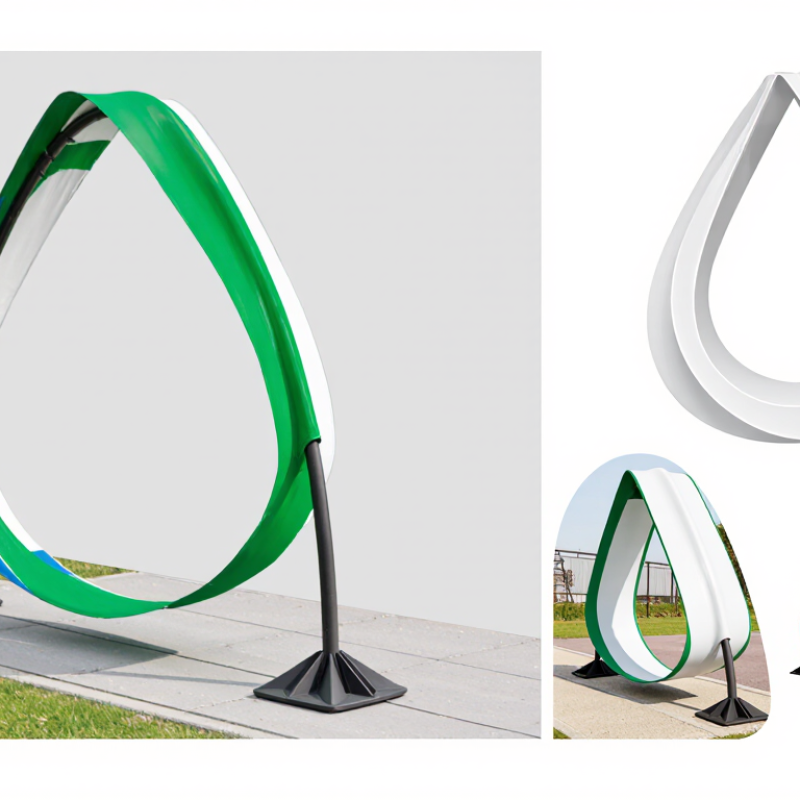
A teardrop banner is a portable outdoor display with a curved, drooping shape. Its fabric stretches over a flexible frame, creating a surface that resembles a falling water drop. Most models use polyester fabric and lightweight poles made from fiberglass or aluminum. The printed message remains visible from a distance, even when people pass quickly.
The banner works through tension and structure. The poles connect at the base and bend into the teardrop profile. A ground spike, cross base, or weighted plate keeps the display upright. Wind can move the fabric, but the curved shape helps reduce direct pressure. In my experience, correct pole assembly matters more than people expect. A small connection error can make the banner lean or wrinkle. The design is practical, though it is not completely windproof. Weather ratings should be checked before outdoor use.
Tips: Choose a base according to the surface and local wind conditions. Use a ground spike for soil and a weighted base for pavement. Keep the fabric clean and fully stretched. Avoid placing the banner beside sharp edges or crowded walkways. Check the frame before every setup. This simple step often prevents avoidable damage. A teardrop banner may look effortless, but reliable performance depends on careful installation and regular inspection.
A teardrop banner is a fabric display stretched over a curved pole. Wind flows around its tapered shape, while the flexible fabric and pole allow the banner to remain visible and move with the airflow.
Approximate aerodynamic pressure at different wind speeds: Pressure increases with the square of wind speed. The values below use the standard air-density approximation of 1.225 kg/m³ and represent airflow pressure before factors such as fabric porosity, shape, and drag are considered.
A teardrop banner works through tension, not complicated mechanics. Its main part is the printed polyester fabric. The fabric carries the message and forms the curved, drooping shape. A stitched sleeve holds the flexible pole inside the banner. Pole sections connect through shock cord, making assembly faster and more stable.
The lower pole enters a base, which keeps the display upright. Cross bases suit indoor floors, while ground stakes work better in soil. Water or sand-filled ballast adds weight in windy areas. A reinforced hem reduces tearing near the base. However, the fit is not always perfect. A loose sleeve can create wrinkles, while an oversized print may pull the pole sideways. In field installations, small alignment errors often become visible from a distance. OAAA reported that U.S. out-of-home advertising revenue reached $9.1 billion in 2023. That figure reflects continuing demand for visible, flexible displays in public spaces.
Tips: Check every pole joint before raising the fabric. Use ballast outdoors, even during calm weather. Keep the printed side facing traffic. Clean the polyester with mild soap, then let it dry fully. A carry bag protects the folded banner, but folding it too tightly can leave stubborn creases. My practical preference is simple: assemble once indoors before the event. It saves time, though it does not prevent every mistake.
| Part or Feature | Typical Specification | Primary Function | How It Works | Practical Considerations |
|---|---|---|---|---|
| Printed Fabric Graphic | Knitted polyester or similar outdoor display fabric; commonly printed with dye-sublimation ink | Provides the visible message, logo area, colors, and shape of the banner | The fabric is sewn with a sleeve or reinforced edge so it can be fitted over the supporting frame | Outdoor fabric should be weather-resistant, colorfast, and suitable for the expected exposure conditions |
| Teardrop Shape | Curved top with a tapered lower section; available in small, medium, and large display sizes | Creates the recognizable profile and keeps the printed surface readable from a distance | The curved frame holds the upper edge under tension while the lower point remains attached to the base or ground fixing | The shape generally remains visible when the fabric is slightly moved by wind |
| Flexible Frame Poles | Usually fiberglass or another lightweight, resilient composite material; supplied as connected sections | Defines the banner outline and supports the fabric | The sections connect together and flex into the curved profile, creating tension across the graphic | Each section should be assembled in the correct order to prevent uneven tension or frame damage |
| Pole Connectors | Elastic cords, ferrules, push buttons, or similar joining hardware | Aligns and secures the individual pole sections | The connectors guide the sections into one continuous frame and help the frame remain stable during setup | Damaged connectors can make assembly difficult and may cause the graphic to sit unevenly |
| Fabric Sleeve or Pole Pocket | Reinforced sewn channel along one or more edges of the graphic | Holds the flexible frame in position | The assembled pole is inserted into the sleeve, allowing the fabric to stretch over the frame | A reinforced sleeve reduces abrasion and helps extend the usable life of the graphic |
| Base | Ground spike, cross base, weighted plate, or water-fillable base, depending on the installation surface | Keeps the banner upright and transfers movement into the support system | The lower pole connects to the base, which provides either anchoring or counterweight | Hard ground commonly requires a weighted or cross base; soil may allow use of a ground spike |
| Ground Spike | Metal or reinforced stake designed for soil, grass, or other penetrable ground | Anchors the banner directly to the ground | The spike is driven into the ground and the lower frame connection is fitted onto it | It is not suitable for concrete, asphalt, indoor flooring, or other surfaces that cannot be penetrated |
| Weighted or Cross Base | Flat metal cross base, weighted plate, or fillable reservoir | Provides stability on hard surfaces and indoor floors | Weight resists tipping while the base connection holds the lower frame section upright | Additional weight may be needed in exposed outdoor locations or stronger wind conditions |
| Lower Pole Connection | Socket, pin, sleeve, or rotating attachment at the base | Joins the bottom of the flexible frame to the support base | It keeps the lower point of the banner positioned correctly while allowing the frame to maintain tension | The connection should be checked before every installation, especially after repeated use |
| Wind Behavior | Designed to flex and move rather than act as a rigid flat panel | Helps reduce direct wind resistance compared with a solid sign | Air can flow around the fabric while the flexible frame bends and returns toward its original shape | A teardrop banner is not automatically safe in all weather; manufacturer instructions and local wind conditions must be followed |
| Assembly Method | Tool-free setup is common; components typically connect by elastic cords or push-button joints | Allows rapid installation, removal, and transport | The poles are connected, inserted into the fabric sleeve, and attached to the selected base | Lay the fabric flat during assembly to reduce twisting and avoid forcing the pole sections together |
| Portability | Collapsible pole sections with a lightweight fabric graphic and carry bag | Makes the banner suitable for events, entrances, exhibitions, retail areas, and temporary promotions | The frame separates into shorter pieces, while the fabric can be folded or rolled for transport | Store the graphic clean and completely dry to help prevent mildew, staining, and permanent creasing |
A teardrop banner works through tension, balance, and controlled movement.
Its printed fabric slides over a curved fiberglass pole, creating the familiar teardrop shape. The pole bends gently, while the fabric remains stretched along its frame. A ground base holds the pole upright. Depending on the model, the base may use water, sand, steel, or a cross-foot system.
The banner does not need electricity or a motor. Wind passes around its curved surface, helping it flex instead of acting like a flat wall. However, airflow still matters. The Outdoor Advertising Association of America reported that U.S. out-of-home advertising revenue reached about $9.1 billion in 2023. This figure shows that physical visibility still supports public-facing promotion, even beside digital media.
In practical use, I have found that poor tension causes more trouble than weak printing. Wrinkles reduce readability. A loose base can also make the banner lean. No banner is truly windproof.
Tips:
Check the pole joints before installation. Slide the fabric fully onto the frame, then secure the lower edge. Keep the base level. On hard ground, use a weighted base. On soft ground, choose a spike base only where permitted. Leave extra clearance around walkways. It sounds obvious, but crowded spaces expose small setup mistakes quickly. Remove the banner during severe weather, even when the supplier lists outdoor use. The “all-weather” wording can be too optimistic.
A teardrop banner uses tensioned fabric stretched over a curved fiberglass or aluminum pole. The fabric is usually knitted polyester because it is lightweight, flexible, and resistant to wrinkling. Many suppliers choose 110–130 gsm polyester for portability, while heavier fabric can improve opacity and stability. A weighted steel or recycled-plastic base keeps the display grounded.
Dye-sublimation is the common printing method. Heat transfers water-based dye into the polyester fibers, rather than leaving ink on the surface. This creates sharp graphics that can withstand folding and outdoor handling. According to Smithers’ digital textile printing reports, textile applications remain a strong growth area, driven by shorter production runs and customized graphics. That matters for teardrop banners, which often need frequent artwork changes.
Direct-to-fabric printing can reduce transfer steps and fabric waste, but color control may require experienced operators. FESPA’s 2023 Print Census reported that 65% of print businesses expected turnover growth, reflecting continued demand for digital production. Still, outdoor performance depends on stitching, UV exposure, wind, and cleaning. Dark fabrics may need a blockout layer, although it can add weight. Some colors also appear slightly different on curved fabric. Test samples are worth the trouble.
Teardrop banners are commonly placed outside shops, cafés, and service businesses to catch the attention of people passing by. Their tall, curved shape helps keep the printed fabric visible, though strong gusts can still make a banner sway. You’ll also see them at farmers’ markets, community festivals, sporting events, and outdoor exhibitions. At these venues, they can mark an entrance, identify a booth, or point visitors toward an activity.
Easy to spot.
Indoors, teardrop banners often stand beside trade-show displays, registration desks, and event stages. Their narrow footprint can work well in busy halls, where floor space is limited. Schools and community groups may use them for open houses or information days. Placement matters: a banner hidden behind a table or crowded walkway is easy to miss. They are useful signs, not a substitute for clear directions.
Tips: Match the base to the surface, such as grass or a hard floor, and follow the setup instructions. Check the banner after placing it, especially outdoors. Keep it away from doorways and narrow paths. I have seen a well-printed banner lose its impact simply because people could not approach it comfortably.
