China’s heavy equipment sector has become a major force in global construction. Its manufacturers supply excavators, loaders, cranes, bulldozers, mining trucks, and road machinery. However, identifying China’s top heavy duty construction equipment suppliers requires more than comparing factory size or export claims.
A reliable evaluation should examine product durability, engine performance, hydraulic efficiency, safety systems, and service coverage. Real project experience matters. A machine working on a rocky quarry faces different demands from one building urban foundations. Buyers should also check parts availability, technician response times, warranty terms, operator training, and telematics support. These details often decide whether a machine earns money or remains idle.
Jim Umpleby, former Caterpillar chairman and CEO, said, “Our customers are the heart of everything we do.” That principle fits this comparison. The strongest Chinese suppliers should understand jobsite pressure, not merely sell impressive specifications. They must provide practical support after delivery, including fast diagnostics and dependable replacement parts.
No supplier is perfect. Some manufacturers offer attractive prices but limited overseas service. Others provide advanced technology but higher maintenance costs. That trade-off deserves honest attention. This guide will compare leading Chinese companies through measurable capabilities, market experience, product ranges, and customer support. It will not treat promotional rankings as final proof.
The best choice depends on terrain, workload, budget, and local conditions. A powerful machine is not always the most suitable machine. Good procurement requires evidence, careful questions, and occasional doubt. That is where this supplier review begins.
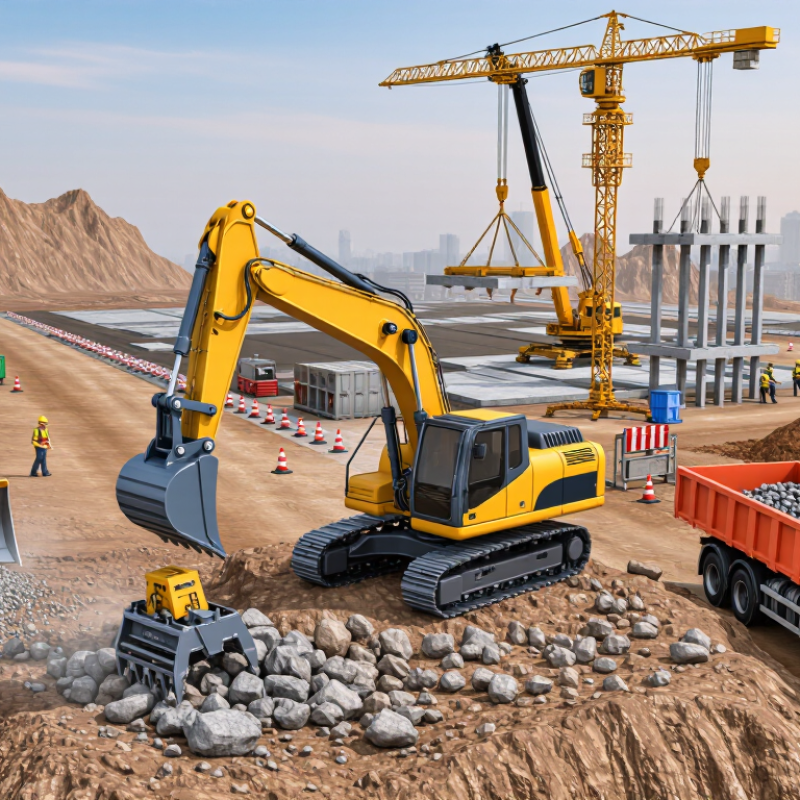
Heavy-duty construction equipment refers to machines built for demanding earthmoving, lifting, drilling, hauling, and infrastructure work. Typical examples include excavators, wheel loaders, crawler dozers, cranes, graders, and articulated dump trucks. These machines handle dense soil, crushed rock, steel components, and long operating cycles.
Industry Scope & Equipment Selection
The industry scope extends from quarrying and highways to ports, dams, mining sites, and large urban projects. Equipment selection depends on payload, digging depth, ground conditions, fuel use, attachment compatibility, and service access. A 30-ton excavator may suit deep foundation work, while a smaller unit can perform better in restricted streets. That detail is often underestimated.
Supplier Evaluation When assessing heavy-duty construction equipment suppliers in China, buyers should examine manufacturing experience, documented testing, component traceability, operator safety features, and after-sales response. Ask for load charts, maintenance intervals, hydraulic performance data, and realistic delivery terms. Factory visits can reveal welding quality, paint preparation, assembly discipline, and spare-parts storage. I have found that polished brochures never replace operating evidence. No checklist is perfect.
Practical Evaluation Reliable suppliers should also explain warranty limits and regional service arrangements clearly. Independent inspections and trial operation can expose excessive vibration, slow hydraulic response, or uncomfortable controls. These issues may look minor during a short demonstration. They become expensive during twelve-hour shifts. A practical evaluation should include the machine, the worksite, the operator, and the maintenance team.
China’s major heavy-duty construction equipment suppliers serve infrastructure, mining, ports, and large earthworks. Their product ranges commonly include excavators, wheel loaders, cranes, bulldozers, graders, and concrete machinery. Large suppliers usually operate integrated factories with machining, welding, hydraulic assembly, and testing areas. That structure can improve consistency, but factory scale alone proves little. Useful evidence includes load-test records, component traceability, and clear production tolerances.
In practical procurement reviews, the strongest evaluations begin with site conditions, not catalog photographs. A quarry may need reinforced undercarriages, dust protection, and stable cooling performance. An urban project may value low noise, transport dimensions, and precise control. Suppliers should explain rated capacity, fuel use, maintenance intervals, and expected service life in writing. Ask for references from comparable climates and duty cycles. Real answers matter.
Reliable Chinese suppliers also provide regional parts warehouses, technician training, remote diagnostics, and documented warranty procedures. Check whether manuals are translated accurately and whether replacement parts have measurable delivery targets. Independent inspection can verify weld quality, safety systems, emissions compliance, and final assembly. No supplier is perfect. Some published performance figures may depend on ideal soil, temperature, or operator skill. That limitation deserves open discussion before a purchase order. A careful buyer should compare total operating cost, not only the initial quotation.
Heavy-duty construction suppliers often specialize by equipment category, not by every machine type. Excavator specialists usually focus on hydraulic efficiency, boom strength, and attachment compatibility. Their machines suit foundation work, quarrying, and urban excavation. Ask for cycle-time data from projects with similar soil conditions.
Wheel loader suppliers emphasize bucket capacity, breakout force, and fuel use. These details matter at aggregate yards, where machines repeat short loading cycles all day. Bulldozer manufacturers usually concentrate on undercarriage durability, blade control, and traction. Crawler cranes require a different evaluation, including lifting charts, counterweight systems, and transport planning. A crane that performs well on paper may create expensive site delays.
Other suppliers focus on articulated dump trucks, drilling rigs, pavers, rollers, or concrete equipment. Their strongest value may be application knowledge rather than the lowest quotation. Request service records, spare-parts lead times, operator training, and warranty procedures. Clear documentation supports reliable purchasing and safer maintenance decisions.
In practice, supplier claims still need field verification. A factory video cannot replace a monitored trial under dust, heat, or heavy loading. I would inspect welds, hydraulic leaks, control response, and cabin visibility before approval. A small issue may become a costly shutdown. Some buyers also overlook local technician coverage. That mistake is understandable, but difficult to correct later.
China’s heavy-duty construction equipment sector combines large-scale manufacturing with fast technology adoption. Off-Highway Research reported that China represented roughly one-third of global construction equipment sales in 2023. KHL’s Yellow Table 2024 valued sales from the world’s leading manufacturers at about $235.6 billion. These figures show strong production capacity, but scale alone does not prove reliability.
Leading suppliers increasingly use robotic welding, digital production records, and automated dimensional inspection. Telematics can monitor fuel use, hydraulic pressure, engine load, and maintenance intervals. Electric drivetrains are also expanding in urban projects, where noise and emissions matter. Quality assurance should include ISO 9001 systems, ISO 12100 risk assessment, and testing aligned with ISO 20474. Independent laboratory reports, component traceability, and documented fatigue testing offer stronger evidence than showroom claims. Still, no factory is perfect. A polished certificate cannot replace long-term field performance. Buyers should examine warranty data, failure records, and local service response times. A low purchase price can become expensive when spare parts arrive slowly.
Tips: Request a factory audit. Check weld penetration records. Test machines under real loads. Compare three years of service data. Ask whether software updates remain available after purchase. Review noise, emissions, and safety documentation for the target market. Off-Highway Research and KHL provide useful market context, yet their sales data cannot confirm every supplier’s product quality. That distinction deserves attention.
Choosing a Chinese heavy-duty equipment supplier requires more than comparing prices. The China Construction Machinery Association reported construction machinery exports above US$48 billion in 2023. This scale shows strong manufacturing capacity, but it does not guarantee consistent quality.
Request factory audit records, production photographs, and recent inspection reports. Check whether the supplier controls welding, hydraulic assembly, and final testing internally. A machine should arrive with clear serial numbers, load data, maintenance schedules, and spare-parts references. Ask for evidence, not promises.
Verify applicable standards, including ISO 9001 certification and destination-market safety requirements. Review test results for fuel use, lifting stability, braking distance, and noise.
The World Bank’s 2023 Logistics Performance Index placed China 19th globally, with a score of 3.7, indicating solid logistics capability but not perfect delivery reliability.
Confirm packaging details, port procedures, insurance responsibilities, and replacement-part lead times in writing.
A useful test is requesting quotations for ten common wear parts. Delayed answers can reveal weak after-sales planning.
Do not trust polished videos alone. Personally, I would also order one unit before a large purchase, although this adds cost and time. That decision may expose hidden issues, such as inconsistent paint thickness or slow fault diagnosis.
Supplier evaluation should include warranty response, technician availability, software access, and training documents. A low purchase price becomes expensive when a machine waits weeks for a simple hydraulic seal.