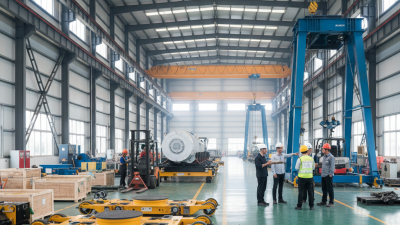
Top 10 Industrial Moving Equipment Types for Global Buyers

Moving heavy loads across factories, warehouses, ports, and construction sites requires more than basic lifting power. Industrial moving equipment must match the load, route, floor condition, distance, and working environment. A steel coil may need a powered platform truck, while a delicate production line could require air skates or specialized machinery skates. Small differences matter.

This guide examines ten equipment types used by global buyers. It considers load capacity, maneuverability, energy use, operator control, maintenance access, and total ownership cost. These factors can influence safety and productivity more than the purchase price alone. Experienced buyers also inspect turning radii, wheel materials, battery performance, and loading heights before approving a machine. Measure twice.

Real projects rarely follow perfect specifications. A warehouse floor may be uneven, or a narrow doorway may limit an otherwise suitable transporter. I have seen equipment appear capable on paper but struggle during tight indoor turns. That is why verified technical data, supplier experience, inspection records, and practical demonstrations remain essential. Buyers should request clear manuals, spare-parts support, training options, and documented test results. Reliable suppliers explain limitations instead of promising universal performance.

The following overview is designed to support informed comparisons across international markets. It does not replace a site assessment or qualified engineering advice. Still, it provides a practical starting point for identifying the right equipment type, asking better supplier questions, and avoiding costly mismatches. The best choice is not always the largest machine. It is the one that moves the intended load safely, efficiently, and consistently.
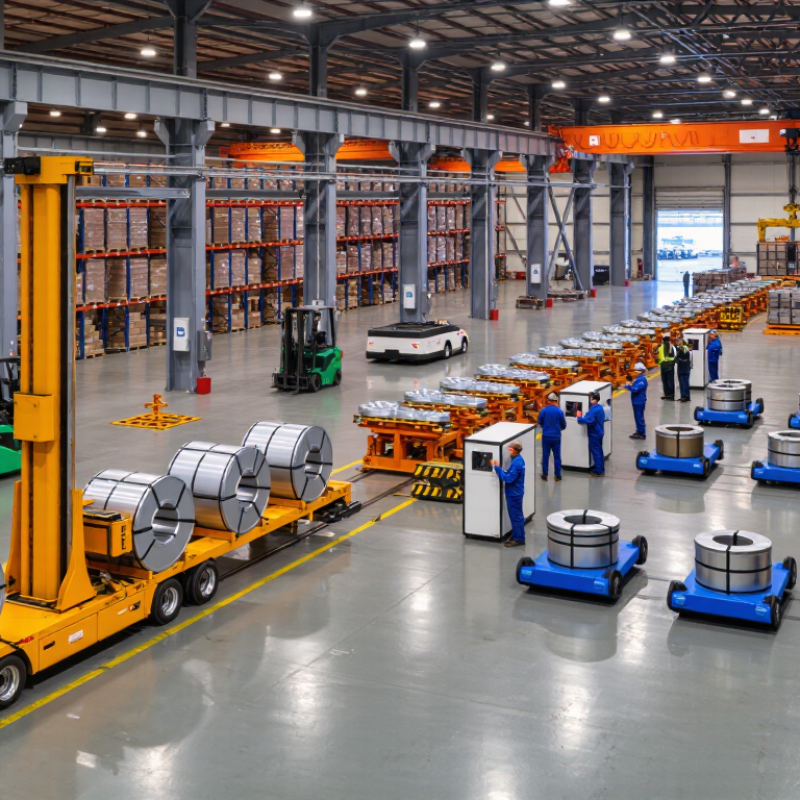
Top 10 Industrial Moving Equipment Types for Global Buyers

What Industrial Moving Equipment Is and How It Supports Material Handling

Top 10 Industrial Moving Equipment Types for Global Buyers

Industrial moving equipment is the working infrastructure behind modern material handling. It moves, lifts, positions, or stores goods across factories, warehouses, ports, and construction sites. Common types include forklifts, pallet trucks, stackers, conveyors, hoists, cranes, carts, platform trucks, automated guided vehicles, and loading equipment.

Each type solves a different movement problem. A pallet truck may handle short transfers between receiving and storage. A forklift can lift heavier loads, but it needs clear aisles and stable flooring. Conveyors support steady flow between workstations, while cranes manage bulky materials above production areas. In one warehouse, a compact electric stacker may fit narrow aisles better than a larger machine. Small details matter.

Material handling depends on more than rated capacity. Buyers should check load dimensions, lifting height, turning radius, duty cycle, floor conditions, power supply, and operator visibility. Safety devices, emergency controls, training, and maintenance access also affect daily reliability. Equipment should match the real workflow, not an ideal drawing.

That sounds obvious.

Yet selection errors still occur. A machine may lift the stated weight but struggle with uneven loads or frequent stops. A conveyor may improve speed but create bottlenecks near packing stations. Trial runs, site measurements, and documented risk reviews provide stronger evidence than catalog figures alone. Requirements also vary by climate, local infrastructure, and available technical support. A careful evaluation may reveal that simpler equipment performs better.

The Main Categories of Industrial Moving Equipment

Industrial moving equipment falls into several practical categories. Forklifts handle palletized loads across warehouses, factories, and loading bays. Pallet trucks suit short-distance movement on smooth floors. Reach trucks serve narrow aisles, while container handlers manage heavier outdoor loads. Selection depends on load weight, lift height, turning space, and floor condition.

Continuous movement requires conveyors, including belt, roller, chain, and screw designs. Cranes and hoists lift steel coils, molds, and machinery above production areas. Heavy-duty transporters move oversized components between workshops. Automated guided vehicles and autonomous mobile robots add flexible routing, but they need reliable mapping and disciplined traffic control. The International Federation of Robotics reported 541,302 industrial robot installations worldwide in 2023, showing strong industrial automation demand. Yet robots do not remove every handling problem.

Market figures vary by research method. Fortune Business Insights valued the global material handling equipment market at about USD 212 billion in 2023 and forecasts continued growth through the decade. That estimate includes several equipment classes, so buyers should avoid comparing it directly with narrow forklift data. In field assessments, a simple pallet truck can outperform automation when routes change daily. Sometimes, less is better. Energy use, operator visibility, maintenance access, spare-part availability, and local safety requirements deserve equal attention. A technically impressive system can still fail when aisle markings fade or charging space is overlooked. Evaluation should include real shift patterns, not only catalog specifications.

Ten Essential Equipment Types for Heavy-Duty Industrial Transport

Top 10 Industrial Moving Equipment Types for Global Buyers

Ten essential equipment types support heavy-duty industrial transport across factories, ports, and construction sites. Heavy-duty modular trailers carry large loads over prepared roads. Self-propelled modular transporters offer precise steering in tight yards. Hydraulic platform trailers handle concentrated weight with adjustable suspension. Lowboy trailers reduce deck height for tall machinery. Extendable trailers support unusually long structures. Each choice depends on load weight, dimensions, route clearance, and local operating rules.

The remaining five types solve different site challenges. Gantry systems lift equipment vertically when cranes cannot reach safely. Hydraulic skidding systems move vessels or transformers across reinforced surfaces. Industrial forklifts manage shorter transfers and warehouse loading. Crawler carriers travel over rough ground with lower surface pressure. Air casters move heavy units smoothly across clean, level floors. In practice, I have seen accurate measurements prevent more failures than expensive equipment. No selection is perfect. Floor damage, weather, and turning space can still change the plan.

Tips: Confirm the real load center, not only the total weight. Inspect ramps, bridges, and floor joints before mobilization. Request current load charts and maintenance records. Keep a small safety margin, because field conditions rarely match drawings exactly. A route trial with empty equipment may reveal hidden clearance problems.

Top 10 Industrial Moving Equipment Types for Global Buyers - Ten Essential Equipment Types for Heavy-Duty Industrial Transport
No. Equipment Type Primary Transport or Handling Role Typical Rated Capacity Typical Operating Environment Power or Propulsion Key Mobility Characteristics Common Industrial Applications Important Selection Factors
1 Counterbalance Forklift Lifting, stacking, and short-distance movement of palletized or packaged loads 1.5–16 tonnes Warehouses, factories, yards, loading docks, and paved outdoor areas Electric battery, diesel, LPG, or compressed natural gas High maneuverability; front-mounted forks; suitable for repeated loading cycles Manufacturing, logistics, construction materials, food processing, and ports Load center, mast height, aisle width, surface condition, emissions limits, and attachment compatibility
2 Reach Stacker Handling and stacking intermodal containers and heavy cargo units 8–45 tonnes, depending on reach and load position Container terminals, rail yards, inland depots, and industrial ports Diesel-hydraulic or hybrid drive Telescopic boom provides flexible stacking depth and lifting height Intermodal freight, steel products, project cargo, and containerized manufacturing goods Rated capacity at reach, boom configuration, spreader type, ground bearing capacity, and fuel efficiency
3 Self-Propelled Modular Transporter Moving exceptionally heavy and oversized loads within industrial sites 100–10,000+ tonnes, based on the number of axle lines Shipyards, power plants, refineries, bridge projects, and heavy fabrication yards Diesel-hydraulic or electric-hydraulic power pack Individually controlled hydraulic suspension and multi-directional steering Generators, transformers, pressure vessels, modules, bridge sections, and ship components Axle-line loading, route geometry, turning radius, floor loading, synchronization, and remote control functions
4 Heavy-Haul Modular Trailer Road transport of oversized industrial loads over short and long distances 50–500+ tonnes, subject to configuration and road regulations Public roads, construction corridors, industrial compounds, and project sites Towed by a heavy-duty tractor unit Extendable decks, hydraulic suspension, modular axle lines, and optional steering systems Wind turbines, industrial boilers, transformers, tanks, machinery, and prefabricated structures Axle count, legal dimensions, bridge limits, hydraulic suspension travel, route permits, and braking system
5 Mobile Crane Lifting, positioning, and relocating heavy loads at changing work locations 20–1,000+ tonnes, depending on crane class Construction sites, energy projects, industrial maintenance areas, and infrastructure works Diesel-hydraulic; some units use hybrid or electric auxiliary systems Roadable or crawler-mounted; telescopic or lattice boom options Plant installation, structural steel, wind-energy components, maintenance, and civil engineering Load chart, radius, boom length, outrigger footprint, ground bearing pressure, wind limits, and transport permits
6 Gantry Crane Vertical lifting and horizontal transfer of heavy components across a defined work area 10–1,000+ tonnes, depending on design and span Factories, shipyards, assembly halls, dry docks, and outdoor fabrication areas Electric motors supplied by fixed power or generator systems Runs on rails or prepared tracks; provides precise controlled movement Shipbuilding, precast concrete, steel fabrication, aerospace assembly, and heavy machinery production Span, lift height, runway alignment, duty class, floor or rail loading, control system, and wind exposure
7 Straddle Carrier Lifting and transporting containers or large loads beneath an elevated frame 30–60 tonnes for common container-handling configurations Container terminals, logistics yards, ports, and intermodal facilities Diesel-electric, diesel-hydraulic, hybrid, or battery-electric Self-propelled, high ground clearance, and capable of stacking or transferring loads without a separate crane Container storage, vessel service areas, rail transfer yards, and empty-container handling Container size, stacking height, lane width, terminal layout, battery or fuel infrastructure, and automation requirements
8 Hydraulic Machine Skate Moving heavy machinery through factories and confined indoor spaces 10–1,000+ tonnes per transport system Factory floors, power stations, workshops, clean industrial areas, and maintenance spaces Hydraulic lifting system; moved by tugger, winch, or manual push depending on load size Low-profile design, tight turning capability, and load leveling through hydraulic adjustment Machine installation, plant relocation, transformer positioning, and heavy maintenance work Floor flatness, wheel or roller type, lifting stroke, load distribution, steering method, and clearance height
9 Air Cushion Transporter Moving heavy, sensitive, or oversized loads with very low floor friction 10–500+ tonnes, depending on the number of air modules Smooth, sealed indoor floors and controlled industrial environments Compressed-air supply; propulsion may be manual, tugged, or integrated Air film reduces friction and floor loading; capable of precise multidirectional movement Aerospace assembly, clean manufacturing, heavy equipment installation, and laboratory facilities Floor sealing, levelness, compressed-air capacity, load stability, environmental cleanliness, and emergency stopping
10 Industrial Tugger Tractor Towing multiple trailers, carts, or material trains across industrial facilities 1–50 tonnes of combined towed load Factories, distribution centers, airports, ports, warehouses, and large campuses Battery-electric, diesel, LPG, or hybrid drive Designed for repetitive point-to-point towing; compact turning and controlled low-speed operation Line-side delivery, warehouse replenishment, baggage handling, parcel movement, and internal logistics Drawbar capacity, trailer compatibility, route gradients, turning radius, battery range, pedestrian safety, and automation options

How to Select Equipment by Load, Distance, Surface, and Worksite

Top 10 Industrial Moving Equipment Types for Global Buyers

How to Select Equipment by Load, Distance, Surface, and Worksite

Choosing industrial moving equipment starts with the real load, not the catalog picture. Pallet trucks and platform carts suit short indoor transfers. Forklifts handle heavier pallets, but require clear aisles and stable flooring. Tow tractors work better when several carts travel across long routes. For elevated handling, stackers, reach trucks, and lifting tables may be more suitable. Distance changes everything. A 20-meter warehouse move is different from a 500-meter production route.

Surface conditions deserve careful inspection. Smooth concrete supports casters, forklifts, and electric movers efficiently. Uneven yards may require larger wheels, stronger frames, or rough-terrain handling equipment. Check ramps, door widths, turning points, drainage grates, and floor load limits. Also consider temperature, dust, noise restrictions, and pedestrian traffic. A technically correct choice can still fail at a narrow doorway. That mistake is common, and expensive.

Tips: Record the heaviest load, its dimensions, and its center of gravity. Measure the longest travel distance and the tightest turn. Test the equipment with a realistic load before final approval. Do not rely only on rated capacity; uneven loads reduce practical stability. Battery charging space, operator visibility, maintenance access, and emergency stopping distance also affect daily performance. Sometimes a smaller machine is safer and faster. It is not always the cheapest option.

Safety, Maintenance, and Global Purchasing Considerations

Top 10 Industrial Moving Equipment Types for Global Buyers

Industrial moving equipment includes forklifts, pallet trucks, stackers, cranes, hoists, conveyors, automated guided vehicles, platform carts, dock levelers, and lifting tables. Safety should guide every purchase. The International Labour Organization reported nearly 2.93 million work-related deaths annually, with 395 million non-fatal injuries worldwide. Poor equipment selection can add to this burden.

Look beyond rated capacity. Check load charts, braking distance, visibility, emergency stops, guarding, and floor conditions. The U.S. Occupational Safety and Health Administration estimates that powered industrial trucks cause about 35,000 serious injuries and 62,000 non-serious injuries each year. Operator training matters. So does daily inspection.

Maintenance planning is often underestimated. Ask about spare-part availability, inspection intervals, battery performance, corrosion resistance, and local technician coverage. Conveyors need accessible guards and clean sensors. Hoists need documented load testing. Cranes require clear inspection records and competent maintenance personnel. Select voltage, language, and safety documentation for the destination country. Confirm compliance with applicable standards, such as ISO 3691-1 for industrial trucks.

A low purchase price can become expensive. That assumption is often wrong. Global buyers should compare total ownership costs, including energy, downtime, training, customs handling, and replacement parts. In practice, maintenance access may matter more than a higher lifting speed. ILO and OSHA figures are broad indicators, not equipment-specific predictions, so buyers should still review site-level incident data and task risks. Even experienced teams miss this.

Top 10 Industrial Moving Equipment Types for Global Buyers

Representative rated-load benchmarks for commonly used industrial moving equipment. Actual capacity depends on configuration, lift height, operating conditions, local regulations, and manufacturer specifications.

Purchasing considerations: Buyers should compare rated capacity, safety systems, operator training requirements, inspection intervals, spare-parts availability, energy standards, and local compliance documentation. Preventive maintenance commonly includes inspections of brakes, tires or wheels, steering, hydraulics, batteries, lifting components, controls, and emergency-stop systems.