
Choosing the top Embedded Computer manufacturers requires more than comparing product catalogs. Buyers must examine processing performance, operating temperature, lifecycle support, cybersecurity practices, and deployment experience. A compact computer inside a factory robot faces different demands than one installed in a medical imaging system or roadside cabinet.
Professor Peter Marwedel defines the field clearly: “Embedded systems are information processing systems embedded into enclosing products.” His statement explains why manufacturer selection cannot depend on processor speed alone. Reliability, thermal design, software compatibility, and long-term availability often matter more.
The strongest manufacturers usually demonstrate practical engineering depth. They publish detailed specifications, offer extended product lifecycles, and provide responsive technical support. Some also support Intel, AMD, ARM, or NVIDIA platforms across multiple form factors. That flexibility can reduce redesign costs when project requirements change.
Still, no manufacturer is ideal for every application. A rugged industrial computer may be excessive for a simple gateway. A low-cost board may fail under vibration, dust, or continuous operation. Marketing language can also hide important limitations.
This guide compares leading Embedded Computer manufacturers through measurable factors, including durability, customization, connectivity, certification, and after-sales service. It also considers real deployment conditions, such as limited cabinet space, unstable network access, and rising maintenance costs.
The ranking is not absolute. Product quality changes, and regional support varies. Readers should verify current datasheets, warranty terms, and lifecycle commitments before purchasing. That step is easy to overlook. It can prevent expensive replacement work later.
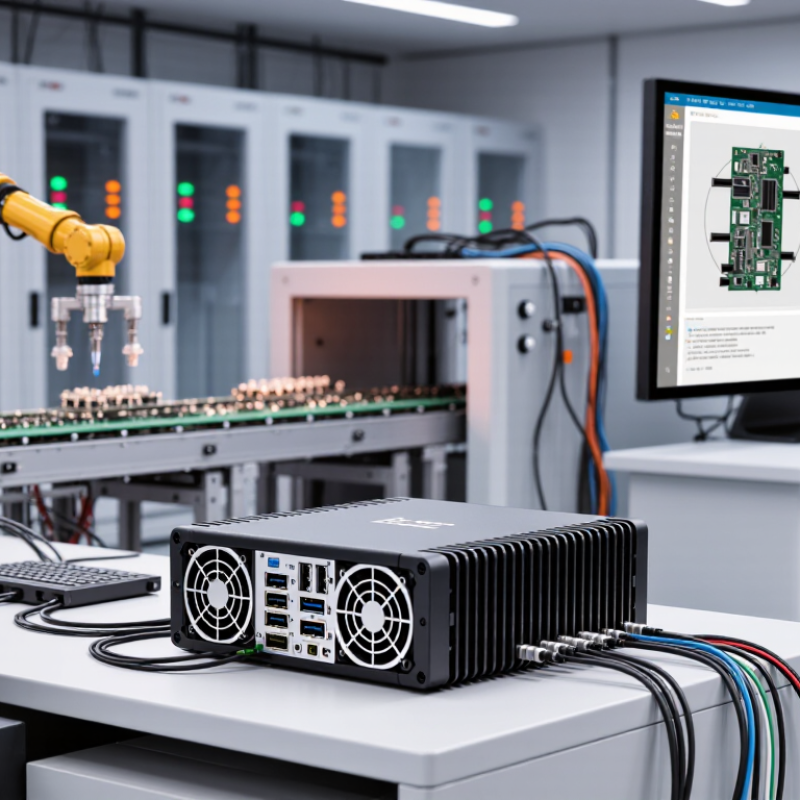
An embedded computer is a compact computing system built for a specific machine or process. It may control a medical monitor, factory robot, vehicle display, or energy meter. Unlike a desktop computer, it often runs continuously inside a larger product. Small size matters. So do heat control, power stability, and long service life.
MarketsandMarkets estimates that the embedded computing market could grow from about 111.5 billion dollars in 2023 to 149.4 billion dollars by 2028. This growth reflects wider use in industrial automation, transportation, healthcare, and connected infrastructure. However, market growth does not make every manufacturer equally suitable. A strong supplier should provide clear processor roadmaps, long-term component availability, secure firmware support, and dependable technical documentation.
Field engineers usually examine more than benchmark speed. They test boot times, vibration tolerance, operating temperatures, and recovery after power loss. A reliable manufacturer also explains repair limits and update procedures before deployment.
The Industrial Internet Consortium stresses lifecycle security and system resilience in its IoT security guidance. That advice is practical, not decorative.
Still, specifications can mislead. A faster processor may create more heat, while a cheaper board may increase maintenance costs. I have seen selection teams overlook cables, mounting space, and remote diagnostics. Those details often decide whether an embedded system works for years.
The companies leading the embedded computer industry are not defined by processor speed alone. Industrial automation specialists, rugged computing manufacturers, and large electronics producers compete closely. The strongest suppliers combine stable hardware, long product lifecycles, and responsive engineering support.
Field evaluations often separate serious manufacturers from weaker alternatives. Leading companies provide fanless systems, wide-temperature operation, and sealed enclosures for factories, transport, and outdoor equipment. Their products may withstand vibration, dust, and repeated power cycles. Engineers also examine thermal testing, component traceability, and certifications such as ISO 9001 or IEC 62368-1. Documentation matters.
Small details reveal experience.
A reliable supplier publishes revision histories and clarifies which components may change. It also offers remote diagnostics, replacement planning, and practical integration guides. However, no company leads every category. One manufacturer may excel in compact edge computers, while another performs better in railway or medical environments. A specification sheet can look impressive yet hide limited availability or weak software support. This is where procurement teams should test actual samples, inspect connector quality, and measure boot stability under low-voltage conditions. Some evaluations still overvalue benchmark scores. That remains a common mistake. The best industry leaders earn trust through predictable delivery, transparent limitations, and support that continues after installation.
The embedded computer industry is led by manufacturers that serve high-demand application sectors such as industrial automation, transportation, healthcare, energy, and retail. The chart below shows an industry demand mix without identifying individual companies or brands.
Industry application mix shown as an aggregated market estimate. Actual shares vary by market definition, geography, product type, and research methodology.
Top embedded computer manufacturers differ less by headline performance than by product range and engineering depth. Some focus on compact fanless computers for retail kiosks, transport displays, and factory terminals. Others offer system-on-module platforms, industrial motherboards, rugged box computers, and edge servers. A broader catalog can simplify sourcing when a project grows from prototype to mass deployment. However, more choices can also create confusion. Engineers must check connector layouts, operating temperature, memory support, and long-term availability.
Technology separates these manufacturers further. Modern platforms may combine multi-core processors, high-speed storage, industrial Ethernet, wireless communication, and accelerator support for vision workloads. Thermal design remains critical. A small aluminum enclosure may look efficient, but poor airflow can reduce performance in a hot control cabinet. During technical evaluations, I would test boot stability, sustained processing, vibration tolerance, and remote management. Short demonstrations are not enough. Real workloads matter.
Support quality also affects the comparison. Manufacturers with strong documentation, BIOS control, driver maintenance, and customization services usually reduce integration risk. Lifecycle planning is equally important for medical, transportation, and factory systems that operate for years. Still, no supplier is perfect. A highly customizable platform may increase cost and development time. A low-power model may lack expansion capacity later. Buyers should compare complete systems, not processor labels alone, and verify every claim through test reports, sample units, and clear service terms.
Top embedded computer manufacturers support far more than desktop-style computing. Their systems operate inside machines, vehicles, medical equipment, and remote infrastructure. Each industry needs a different balance of processing power, durability, security, and product lifespan.
In factory environments, embedded computers control robotic arms, inspect surfaces with cameras, and collect data from vibration sensors. A sealed enclosure can protect electronics from dust, oil mist, and temperature changes. However, a missed vibration test can cause expensive failures later.
Transportation applications include railway signaling, fleet monitoring, traffic control, and autonomous vehicle subsystems. These computers often require wide voltage input and reliable operation during movement. Healthcare equipment uses them for patient monitoring, diagnostic imaging, laboratory automation, and surgical support systems. Stable performance matters, but so do traceability and long-term component availability.
In retail, compact computers power self-service kiosks, digital signage, smart shelves, and payment terminals. Space is limited there. Heat management is often underestimated.
Energy and utility operators deploy embedded platforms in substations, solar installations, wind turbines, and pipeline monitoring equipment. These locations may have weak connectivity, so local processing reduces delays and supports continuous operation.
Logistics companies use embedded computers for warehouse scanners, automated storage systems, and cold-chain monitoring. Leading manufacturers usually provide lifecycle planning, technical documentation, and testing support. Still, specifications alone cannot predict every field condition. A cooling plan can be overlooked. Real installations remain imperfect, and engineers sometimes learn more from a failed pilot than a polished datasheet.
Selecting an embedded computer manufacturer requires more than comparing processor speed or unit price. IoT Analytics reported about 16.6 billion connected IoT devices worldwide in 2023, with continued growth expected in 2024. That scale increases pressure on product stability, supply planning, and long-term technical support. Buyers should examine thermal performance, operating temperature, vibration resistance, and storage endurance. A device that works on a test bench may fail inside a dusty cabinet.
Manufacturer experience matters. Review its industrial case studies, engineering response times, and product roadmaps. Ask whether the supplier supports firmware updates, security patches, and component substitutions during shortages. Hardware lifecycle data is also important. Embedded products may operate for seven years or longer, while consumer components can change much faster. Independent certification, including ISO 9001 processes and relevant electromagnetic compatibility testing, adds credibility. Still, certification alone does not guarantee dependable field service.
Tips: Request a sample unit and test it under real heat, power variation, and network loads. Compare total ownership cost, not only the purchase price. Check repair procedures, warranty limits, and last-time-buy policies. Ask for measurable service targets. Vague promises are warning signs.
A practical scorecard can rank reliability, customization, security, delivery capacity, and support. Weight each category according to the application. A medical cabinet needs different evidence than a roadside controller. Buyers sometimes overvalue technical specifications. That is understandable, but it can produce an expensive mismatch. The best manufacturer is not always the largest one; it is the one that can prove consistent performance after installation.
| Evaluation Dimension | What Buyers Should Verify | Relevant Standard or Evidence | Practical Benchmark | Why It Matters |
|---|---|---|---|---|
| Product Reliability | Operating temperature, vibration resistance, shock resistance, humidity tolerance and field failure data. | IEC 60068 environmental testing methods; documented MTBF methodology. | Industrial models commonly offer operating ranges such as -40°C to +85°C, subject to configuration and workload. | Reduces downtime in factory, transportation, energy and outdoor applications. |
| Processor and Performance Options | Availability of x86, ARM or other architectures, processor generations, memory capacity and hardware acceleration. | Published processor specifications, thermal design power data and independent performance tests. | The platform should provide sufficient performance headroom for the intended workload rather than only meeting minimum requirements. | Supports computer vision, edge analytics, automation, networking and real-time workloads. |
| I/O and Expansion | USB, Ethernet, serial ports, digital I/O, CAN, GPIO, storage interfaces, PCIe and wireless expansion. | Complete interface list, electrical specifications, pinout drawings and expansion-module documentation. | All required interfaces should be available without relying on untested third-party adapters. | Simplifies system integration and lowers the risk of compatibility problems. |
| Lifecycle and Availability | Product change notification process, end-of-life policy, last-time-buy procedure and successor-product compatibility. | Formal product-lifecycle policy and written availability commitment. | Long-life industrial programs often target availability periods of 5 years or more; confirm the exact commitment in writing. | Protects the cost of redesign, recertification and field replacement. |
| Operating System and Software Support | Support for Linux, Windows IoT, real-time operating systems, board support packages, drivers and update procedures. | Versioned software packages, kernel or driver maintenance policy and technical documentation. | Drivers and board support packages should be available for the selected hardware revision and operating-system version. | Shortens development time and improves maintainability after deployment. |
| Cybersecurity | Secure boot, trusted-platform functions, signed firmware, vulnerability response and security-update procedures. | Security advisory process, CVE response records and documented platform-security features. | The manufacturer should define vulnerability notification, remediation ownership and update timelines. | Limits unauthorized access and supports regulatory and customer security requirements. |
| Compliance and Certifications | Electrical safety, electromagnetic compatibility, environmental compliance and industry-specific approvals. | IEC 62368-1, applicable EMC requirements, RoHS, REACH and sector-specific standards such as EN 50155 where relevant. | Certificates and test reports should match the exact model, configuration and target market. | Prevents certification delays and supports legal market access. |
| Manufacturing Quality | Quality-management system, traceability, incoming inspection, production testing and corrective-action process. | ISO 9001 certification, audit records, lot traceability and documented test procedures. | Prefer controlled manufacturing with serial-number traceability and documented final inspection. | Improves consistency across production batches and simplifies root-cause analysis. |
| Customization Capability | BIOS or firmware customization, enclosure changes, connector modifications, branding restrictions and engineering resources. | Engineering change process, non-recurring engineering quotation and validation plan. | Customization should include documented ownership, testing responsibilities and maintenance terms. | Enables better mechanical, electrical and software fit for specialized deployments. |
| Thermal and Mechanical Design | Fanless options, heat-spreader design, enclosure dimensions, mounting method, ingress protection and airflow requirements. | Thermal test results, mechanical drawings and ingress-protection test documentation where applicable. | The thermal solution should be validated at the maximum ambient temperature and expected sustained load. | Reduces throttling, acoustic noise, dust exposure and premature component aging. |
| Technical Support | Pre-sales engineering, response times, debugging assistance, documentation quality and repair or replacement procedures. | Support agreement, service-level terms, escalation path and sample response records. | Support commitments should be measurable, including response time, ticket ownership and replacement conditions. | Reduces integration delays and limits the operational impact of failures. |
| Total Cost of Ownership | Unit price, development fees, accessories, software licenses, support, energy use, maintenance and replacement costs. | Five-year cost model based on realistic quantities, service requirements and lifecycle assumptions. | Compare complete system cost rather than hardware purchase price alone. | Identifies the most economical solution over the full deployment lifecycle. |
| Supply-Chain Resilience | Component sourcing, production locations, lead times, inventory strategy and alternative-component qualification. | Supply-continuity plan, current lead-time data and formal change-notification procedure. | Require realistic delivery estimates and a documented response plan for component shortages. | Improves production planning and reduces the risk of unexpected supply interruptions. |
Note: Benchmarks are general buyer-evaluation guidelines. Actual specifications, certifications, availability periods and performance results must be confirmed for the exact embedded computer model and configuration.
