
Why Choose Double Doors for Global Sourcing?
Global sourcing decisions often begin with a practical question: can the door perform reliably across different markets? Double Doors offer a wider opening, smoother movement for bulky goods, and stronger visual impact in commercial spaces. They can support warehouses, hotels, retail stores, schools, and public buildings. However, wider access does not automatically mean better performance.
Gary Johnson, a respected door hardware specialist, has often stated, “The door is the most used and abused piece of equipment in a building.” That observation matters when selecting Double Doors for international projects. Buyers must examine hinges, locks, seals, frames, glass, finishes, and installation methods. A polished sample can look convincing. Real performance appears after repeated use, changing weather, and imperfect handling.
Experienced sourcing teams compare more than purchase prices. They check tested specifications, manufacturing consistency, packaging quality, replacement parts, and technical support. Door dimensions should match local construction standards and site conditions. Materials also need careful evaluation. Steel may provide strength, while aluminum can reduce weight and corrosion concerns. Timber offers warmth, but it may require stricter moisture control.
There is no universal best choice.
One weakness remains easy to overlook: communication. A small measurement error can delay an entire shipment. Clear drawings, approved samples, inspection records, and honest tolerance discussions reduce that risk. Even then, global sourcing is never completely predictable. The strongest suppliers acknowledge limitations, document them clearly, and improve through each project. That practical honesty makes Double Doors a more dependable investment.
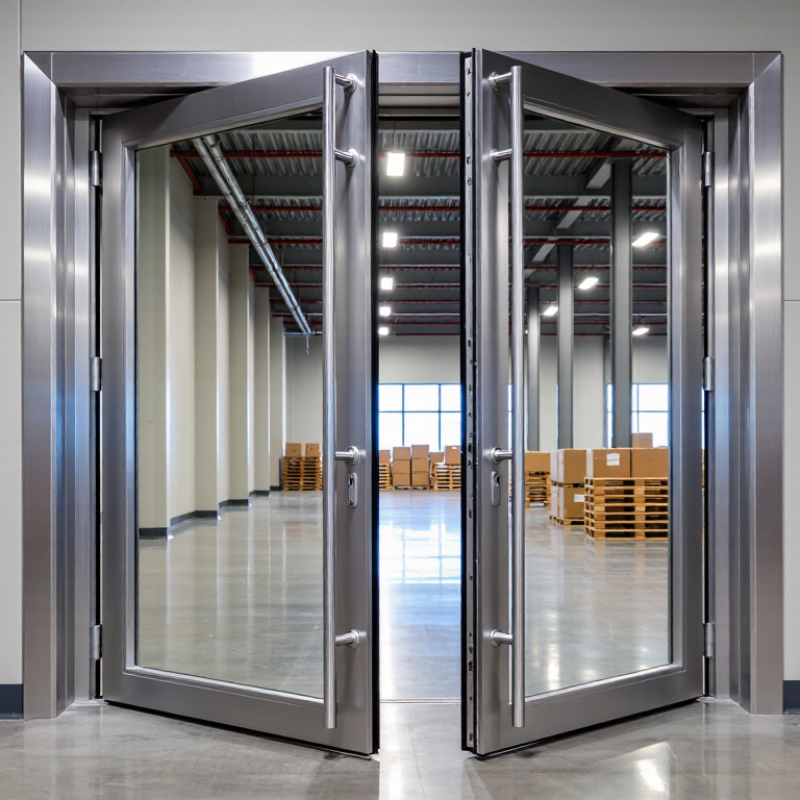
Why Choose Double Doors for Global Sourcing?
Double Doors: Definition, Structure, and Main Types
Double doors use two coordinated door leaves within one opening. Each leaf may open independently, or both can swing together. This structure creates a wider passage for furniture, machinery, and high-traffic movement. It also gives buyers more layout flexibility during global sourcing.
The main types include French doors, unequal double doors, and full-equal double doors. French doors usually feature glass panels and suit residential or hospitality interiors. Unequal doors combine one active leaf with a narrower secondary leaf. This saves space during daily use. Full-equal doors provide a broad, balanced opening for commercial and institutional projects. Hinges, frames, seals, locks, and astragals must work as one system. A beautiful panel cannot correct a weak frame.
Material choices include solid timber, engineered wood, steel, aluminum, and composite cores. Each option affects weight, insulation, maintenance, and shipping cost. The International Energy Agency reported that buildings consume about 30% of global final energy. Therefore, door seals and thermal performance deserve attention, not only appearance. In practice, suppliers should verify test methods, moisture resistance, cycle testing, and packaging standards before placing orders. Specifications can look complete but still hide small compatibility problems. Door swing direction is often overlooked. That mistake can delay installation.
Double doors offer practical advantages in international sourcing, especially for commercial and industrial projects. Their wider opening allows forklifts, furniture, and bulky equipment to pass through with less handling. This can reduce loading time and lower the risk of scratches or impact damage. They also support smoother movement in warehouses, workshops, and busy public facilities.
International buyers can choose different materials, insulation levels, glass options, and security features. These choices help match local weather, building use, and maintenance expectations. Double doors may improve traffic flow when people enter from both sides. However, wider is not always better. The frame needs stronger support, and installation requires accurate measurements. A small error can create uneven gaps, poor sealing, or difficult operation. Sourcing decisions should consider the full cost, including packaging, freight space, local labor, spare parts, and after-sales communication. The cheapest quotation may become expensive later.
Tips: Ask suppliers for technical drawings, opening dimensions, door weight, hardware details, and test records. Confirm whether dimensions include the frame or only the panels. Request samples of finishes when color consistency matters. Check packing methods carefully, especially for long-distance shipping. Compare lead times using the same specifications. Keep written approval records. One overlooked detail can delay an entire installation. It is also wise to review the design with a local installer before placing a large order. Their feedback may expose problems that catalog images hide.
| Sourcing Dimension | Typical Reference Data | Key Advantage of Double Doors | Specification Checkpoint |
|---|---|---|---|
| Clear Opening Width | Common double-door assemblies provide approximately 1,500–2,400 mm of combined clear width, depending on leaf size, frame, and hardware. | A wider opening supports the movement of large equipment, carts, crates, and oversized packages without dismantling them. | Request the net clear opening with both leaves fully open; do not rely only on the nominal door size. |
| Pallet Compatibility | Common pallet footprints include 800 × 1,200 mm and 1,000 × 1,200 mm. Actual handling clearance depends on the pallet orientation and equipment used. | The broader entrance can reduce the need to rotate or reconfigure pallets during loading and unloading. | Compare the clear width with the pallet width, packaging overhang, forklift dimensions, and required maneuvering space. |
| Accessibility Reference | The U.S. ADA Standards generally require at least 815 mm (32 in) of clear passage for an accessible doorway. Local requirements may differ. | One active leaf can provide routine pedestrian access, while both leaves can be opened for wider deliveries and equipment. | Confirm the active-leaf clear width, threshold height, opening force, maneuvering clearance, and destination-country regulations. |
| Operational Flexibility | A two-leaf configuration can operate with one leaf for normal traffic or both leaves for oversized loads. | It provides two operating modes, helping reduce unnecessary exposure of the full opening during daily use. | Specify the active leaf, inactive leaf, flush bolts, coordinators, hold-open devices, and preferred opening direction. |
| International Transport and Packaging | Door leaves, frames, glass, and hardware may be packaged as separate components. Packaging dimensions and total weight vary by material and design. | A modular configuration can simplify handling and replacement of individual components during international delivery. | Request packed dimensions, gross weight, pallet count, moisture protection, lifting points, and installation instructions. |
| Installation and Site Access | The required installation space includes the frame, leaf swing or sliding zone, threshold, and hardware clearance; the exact requirement is project-specific. | The system can accommodate wider access routes where a single leaf would be too narrow. | Verify the structural opening, floor level, wall thickness, surrounding clearance, and local installation method before ordering. |
| Security Configuration | Double doors normally require coordinated locking between the active and inactive leaves, often including a central meeting stile or astragal. | The opening can be designed for controlled access while retaining a large emergency, service, or logistics passage. | Specify lock type, multipoint locking, cylinder format, panic hardware, security rating, and compatibility with the access-control system. |
| Weather and Air Performance | A larger opening does not automatically provide better thermal or air performance. Results depend on seals, threshold design, frame construction, and installation quality. | Double doors can be configured for exterior applications when the selected assembly has suitable tested performance. | Request tested air leakage, water penetration, wind-load, thermal, and acoustic performance where required by the project. |
| Maintenance and Spare Parts | Two leaves generally mean additional hinges, seals, locking points, and alignment components compared with a single-leaf door. | Individual components can often be serviced or replaced without replacing the entire opening assembly. | Confirm spare-part availability, component standardization, adjustment procedures, warranty terms, and technical support for the destination market. |
| Compliance and Documentation | Required documents may include drawings, material declarations, test reports, installation manuals, packing lists, and certificates required by the importing country. | A clearly documented configuration reduces interpretation differences between the buyer, supplier, installer, and customs broker. | Define applicable building, fire, accessibility, safety, environmental, and import requirements before quotation and production. |
Why Choose Double Doors for Global Sourcing?
Material, Design, and Performance Factors to Compare
Double doors can improve access, visual openness, and shipment flexibility. Yet their value depends on material selection and site conditions. Aluminum offers low maintenance and stable dimensions. Steel provides strong security and impact resistance. Timber creates warmth but needs stricter moisture control. Composite frames may balance insulation and durability, although specifications vary widely.
Performance data deserves careful review. The U.S. Department of Energy reports that windows can account for 25–30% of residential heating and cooling energy use. This is not a door-specific figure, but it highlights the risk of poorly insulated glazed openings. Compare U-values, air leakage, water resistance, solar control, and acoustic ratings. Also check whether testing follows recognized standards, such as EN 14351-1 or ASTM methods. A lower U-value is helpful. It is not the whole answer.
Design affects sourcing too. A wider opening may require stronger hinges, closer coordination, and better threshold drainage. In coastal projects, corrosion-resistant coatings and compatible fasteners matter. In cold regions, thermal breaks and insulated glass deserve priority. Installation errors remain common. Even a high-performing door can leak when the frame is poorly aligned. Procurement teams should request full test reports, declared tolerances, spare-part plans, and climate-specific warranties. Some specifications still look impressive but lack field evidence. That weakness should be questioned before placing a global order.
Material, design, and performance factors influence the suitability of double doors for different projects. The chart compares typical thermal conductivity values of common frame materials; lower values generally indicate better insulation potential, although the final door U-value depends on the complete assembly, glazing, seals, and hardware.
Typical thermal conductivity of frame materials, measured in W/m·K. Values are representative material-property figures and may vary by grade, formulation, moisture content, and construction.
Double doors can improve access, ventilation, and movement of large goods. Yet their value depends on controlled manufacturing and verified compliance. Global sourcing standards should cover frame strength, hinge durability, glass safety, weather resistance, and surface performance. Requirements vary by destination, so suppliers must match products to local building codes and installation conditions.
Certifications offer useful evidence, but they require careful checking. Confirm the certificate holder, testing scope, expiry date, and issuing laboratory. Quality systems such as ISO 9001 can support consistent production, while fire, acoustic, and energy ratings need product-specific test reports. Do not accept a certificate copied from another model. That mistake is easy to make.
Supplier checks Supplier checks should include factory records, material traceability, production samples, and independent inspections. Ask for drawings with exact dimensions, tolerances, hardware details, and packaging methods.
A sample should be opened, locked, and exposed to realistic handling before approval. Check welds, seals, alignment, and coating thickness. A clean showroom can hide weak process control.
Factory visits help, but one visit cannot prove every shipment will match. Use pre-production approval, mid-production checks, and final inspection records.
Keep corrective actions in writing, even when the supplier seems reliable. That discipline may feel slow. It prevents expensive surprises.
Double doors can make global sourcing more practical when access, handling, and future maintenance matter. UNCTAD’s Review of Maritime Transport 2023 reports that ships carry over 80% of global merchandise trade by volume. That scale makes shipping efficiency important. Double doors may fit wider crates, forklifts, and replacement equipment without forced unloading. However, two panels need stronger protection during transit. Hinges, seals, and frames can suffer when packaging is weak.
Cost is not only the factory price. Compare the full landed cost, including crating, freight space, duties, installation labor, and possible site changes. The World Bank’s 2023 Logistics Performance Index evaluates 139 economies through customs, infrastructure, tracking, and delivery timeliness. Delays can make a low quotation expensive. Ask suppliers for packed dimensions, gross weight, pallet design, spare hardware, and a clear installation drawing. Small details matter. I have seen projects underestimate local labor.
Long-term value depends on alignment and sealing. The International Energy Agency states that buildings consume about 30% of global final energy. Poorly adjusted doors can create drafts, noise, and repeated service calls. Choose corrosion-resistant hardware and replaceable weather seals when climate exposure is severe. Yet double doors are not automatically better. They require more adjustment than a single leaf, and uneven floors can expose that weakness quickly. A trial installation is worth considering before committing to a large order.
